


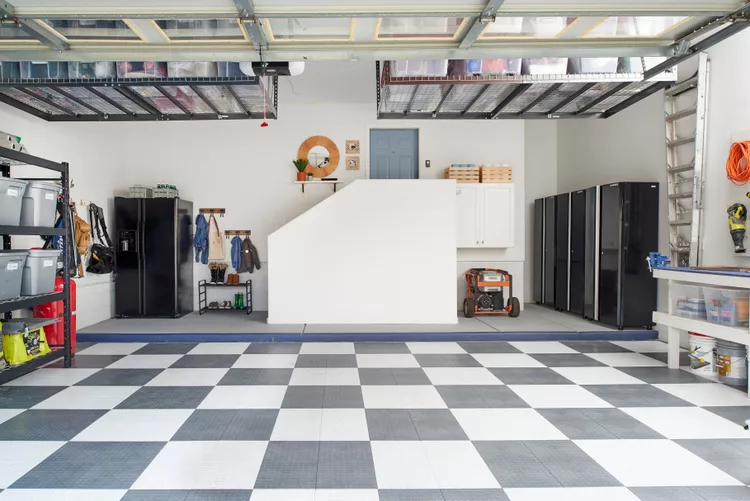
Packed Garage Floors – Create Storage Above Ground Level
A packed garage floor usually isn’t short on total space. Much of the unused capacity is above eye level, along walls, over work areas, and near the ceiling. Moving appropriate belongings upward can reopen walking and parking areas without adding another cabinet to an already crowded room.
The trick is deciding what belongs overhead and what needs to stay within easy reach.
Clear the Floor Before Buying Storage
Start by grouping what currently occupies the floor. Separate frequently used tools, seasonal equipment, sports gear, household overflow, recycling, and items waiting to be discarded or donated.
This prevents a common mistake: installing new storage for possessions you don’t actually need. Once obvious clutter is removed, measure open walls and ceiling zones before selecting racks or shelving.
Keep Daily Items Within Reach
Vertical storage works best when frequency controls height. Things used every week should remain easy to reach, while lightweight seasonal items can occupy higher positions.
Heavy or awkward objects deserve more caution.
Turn Open Walls Into Working Storage
Wall-mounted shelves, pegboards, hooks, rails, and track systems can hold many objects that otherwise lean against walls or spread across the floor.
Homeowners researching layouts may encounter organized home ideas while planning the project, but measurements should always come from the actual garage. Doors, windows, outlets, switches, and vehicle clearance can limit usable wall space.
Store long-handled garden tools vertically when practical so they don’t create a tangled corner.
Use Overhead Space Selectively
Ceiling racks can be useful for bins containing holiday decorations, camping equipment, or other lightweight seasonal belongings. They are less convenient for objects needed every few days.
A collection of practical storage inspiration may help generate ideas, but overhead installations must be compatible with the structure and installed according to their rated requirements.
| Storage Zone | Good Candidates | Avoid |
|---|---|---|
| Eye level | Daily tools | Bulky rarely used bins |
| High walls | Seasonal gear | Unstable loose objects |
| Ceiling racks | Lightweight bins | Frequently needed items |
| Floor edge | Large equipment | Random small clutter |
Create Clear Zones Around Activities
Storage works better when related objects stay together. Keep automotive supplies near the vehicle work area, garden equipment near the exterior door, and frequently used household tools near a workbench.
While reviewing general organization resources, focus on ideas that support your routines rather than copying a picture exactly. A family with bicycles needs a different layout from someone using half the garage as a workshop.
Leave clear access to electrical panels, doors, appliances, and other equipment that must remain reachable.
Where Vertical Storage Can Fail
Putting everything high isn’t the goal. Overhead areas become frustrating when commonly used belongings require a ladder every time, and overloaded shelves can become dangerous if their installation or weight limits are ignored.
Another mistake is filling transparent or unlabeled bins so densely that finding one item requires unloading several others. Vertical storage should reduce handling, not turn clutter into a taller pile.
Frequently Asked Questions
What should be stored on garage walls?
Tools, bicycles, hoses, sports equipment, folding chairs, and other suitably sized items can work well on properly selected wall systems. Placement depends on weight, wall construction, and how often each item is used.
Are ceiling racks useful in small garages?
They can free significant floor area when the ceiling and installation are suitable. They work best for lighter, less frequently accessed belongings rather than everyday tools or unusually heavy objects.
How do I keep garage storage from becoming cluttered again?
Give categories fixed zones, leave some open capacity, and remove unused items periodically. If every shelf and hook begins completely full, new possessions will quickly return to the floor.
Make the Floor Useful Again
Build upward with purpose rather than trying to suspend every possession. Clear unnecessary items first, reserve convenient heights for frequently used gear, and use high storage for lighter seasonal belongings. A garage feels larger when the floor becomes circulation and working space again instead of the default place for everything without a home.







Leave a Reply