


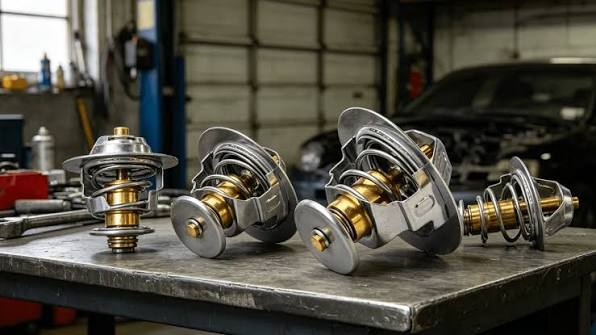
Faulty Thermostat Problems – Restore Efficient Engine Warmup Quickly
The thermostat regulates coolant flow so an engine can reach and maintain its intended operating temperature. A faulty thermostat may stick open, making warmup unusually slow, or stick closed and contribute to overheating. Recognizing the difference helps drivers avoid replacing cooling-system parts without understanding the actual problem.
Temperature behavior, heater performance, warning lights, and diagnostic data can provide useful clues.
Why Engine Warmup Matters
Engines are designed to operate within a controlled temperature range. The thermostat restricts coolant circulation when the engine is cold and opens as operating temperature rises.
People browsing general automotive technical reading may see cooling problems grouped with many other performance issues. Thermostat faults deserve separate attention because both underheating and overheating can create noticeable operating changes.
A Thermostat Can Fail in More Than One Way
A thermostat stuck open allows coolant to circulate too soon, often making the engine slow to warm. A thermostat stuck closed can restrict circulation and allow temperature to climb rapidly.
Those two failures demand different levels of urgency.
Recognize the Temperature Pattern
A vehicle that takes unusually long to produce cabin heat may have a thermostat stuck open, although low coolant or HVAC problems can also affect heater performance.
A rising temperature gauge demands more caution. General home garage service tips can help owners become familiar with maintenance concepts, but overheating should never be treated as a situation where continued driving is automatically safe.
If temperature rises beyond its normal range, reducing the risk of engine damage becomes the immediate priority.
Check the Cooling System Safely
Never remove a radiator or pressurized coolant cap while the engine is hot. Hot coolant can escape under pressure and cause serious burns. Allow the engine to cool fully before any inspection requiring the system to be opened.
| Observed Pattern | Possible Issue | Next Check |
|---|---|---|
| Slow warmup | Thermostat stuck open | Temperature data |
| Rapid overheating | Restricted coolant flow | Stop and inspect |
| Weak cabin heat | Low temperature or coolant issue | Coolant system |
| Fluctuating gauge | Multiple possible faults | Full diagnosis |
Coolant level, leaks, radiator condition, water-pump operation, fans, sensors, and trapped air may all influence temperature.
Drivers reading broader modern car maintenance resources should keep that overlap in mind rather than assuming every abnormal gauge reading proves thermostat failure.
Replacement Should Include Basic Inspection
Once diagnosis points toward the thermostat, replacing it with the correct temperature specification is important. The housing, gasket or seal, coolant condition, and nearby hoses should also be inspected.
Watch for Air After Service
Opening a cooling system can introduce air. Some vehicles require specific bleeding or filling procedures to remove trapped air correctly.
Ignoring that requirement can produce poor heater performance or unstable temperature readings even after a new thermostat has been installed.
Common Thermostat Misdiagnoses
An overheating engine doesn’t automatically have a bad thermostat. A failed cooling fan, coolant leak, restricted radiator, damaged water pump, head-gasket problem, or inaccurate temperature sensor can create similar symptoms.
Likewise, slow warmup isn’t proof by itself. Cold weather and driving conditions influence warmup time. Look for a repeatable change from the vehicle’s normal behavior and confirm the fault before replacing components.
Frequently Asked Questions
Can a thermostat stuck open reduce fuel economy?
It can. If the engine remains cooler than intended for extended periods, engine management may not operate under the same conditions it would after normal warmup.
Is it safe to drive with a thermostat stuck closed?
Continuing to drive while the engine overheats can cause serious damage. If temperature rises abnormally, stop safely and allow the vehicle to cool before further diagnosis.
How long does a replacement thermostat last?
Service life varies with vehicle design, part quality, coolant condition, operating environment, and cooling-system health. There isn’t one dependable replacement interval for every vehicle.
Restore Normal Temperature Control
A thermostat problem is best diagnosed by watching the complete temperature pattern rather than reacting to one symptom. Slow warmup suggests a different failure path from rapid overheating.
Check the surrounding cooling system, follow safe handling practices, and use the correct replacement when thermostat failure is confirmed. Normal temperature control protects both engine performance and everyday drivability.






Leave a Reply