


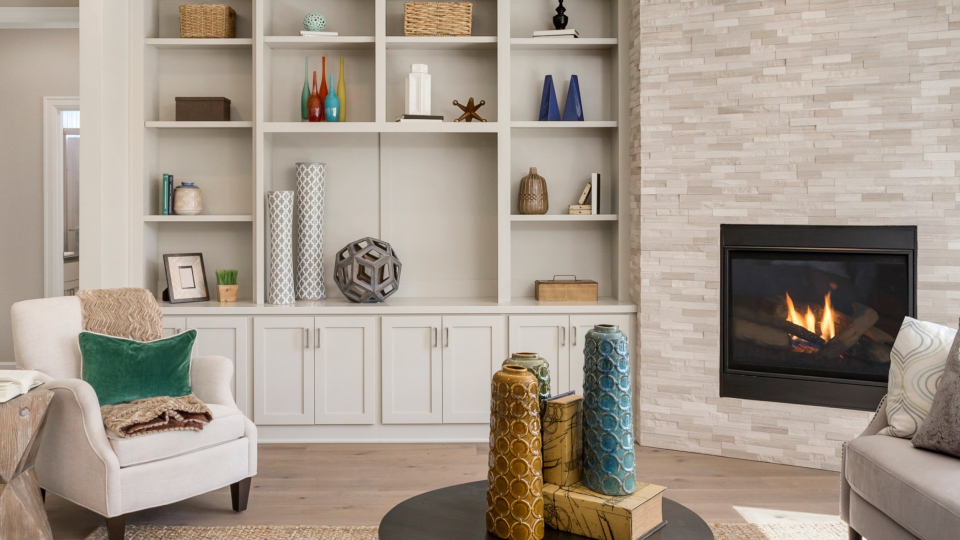
Crowded Home Shelves – Reduce Clutter With Better Grouping
Crowded shelves often look messy even when every object is useful or attractive. The problem is usually not the shelf itself but the lack of clear groups, open space, and visual hierarchy.
Instead of buying more organizers immediately, remove everything from one shelf and rebuild it deliberately. Grouping related objects can make the same storage area feel calmer without reducing its practical value.
Start by Clearing One Shelf Completely
Working around existing clutter makes it difficult to judge what belongs together. Emptying one shelf gives you a clean visual boundary and exposes items that have stayed there mainly through habit.
Sort the contents into simple categories: books, decorative objects, daily-use items, paperwork, keepsakes, and things that belong elsewhere.
Remove Objects That Have No Clear Job
An item doesn’t need to be thrown away simply because it leaves the shelf. Move rarely used belongings to better storage and relocate objects that naturally belong in another room.
People collecting home organization ideas may see complicated systems, but reducing unnecessary shelf traffic is often more useful than adding another container.
Create Groups Instead of Spreading Everything Evenly
Objects usually look more intentional when they form small clusters. A few books beside a bowl, framed photograph, or small plant can read as one composition rather than several unrelated items competing for attention.
Try leaving some visible shelf surface around each group. Interior styling perspectives can provide inspiration, but breathing room is what often makes ordinary belongings look more deliberately arranged.
| Shelf Problem | Better Approach | Result |
|---|---|---|
| Many tiny objects | Form small groups | Less visual noise |
| Mixed paperwork | Use one holder | Cleaner boundary |
| Similar items scattered | Keep together | Easier retrieval |
| Every inch filled | Leave open space | Calmer appearance |
Vary Height Without Creating Randomness
Rows of objects at exactly the same height can feel flat, while too many height changes create visual noise. Use a few deliberate levels instead.
Place taller pieces toward the back where practical, stack a couple of books horizontally, or position a smaller object beside something taller. Broader household design commentary can suggest decorative directions, but the final arrangement should still serve the people using the room.
Separate Display Space From Everyday Storage
Not everything on a shelf needs to be styled. If you frequently reach for chargers, mail, remote controls, craft materials, or work supplies, give those items a clearly defined storage zone.
A basket, tray, magazine holder, or lidded box can contain practical clutter without pretending it is decoration. Matching every container is less important than making the storage easy to maintain.
Keep High-Use Items Easy to Reach
A beautiful arrangement fails if someone has to dismantle it several times a day to reach something important. Reserve easy-access positions for objects that are actually used.
Less-frequent items can sit higher, deeper, or inside closed containers.
Why More Storage Accessories Can Make Things Worse
Buying baskets and boxes before reducing clutter can create another layer of objects to manage. Containers hide visual mess, but they don’t decide what deserves shelf space.
Another common mistake is filling every gap because empty space feels unfinished. On open shelving, blank areas perform a useful design job. They separate groups and give the eye somewhere to rest, which can make the shelf appear larger and more organized.
Frequently Asked Questions
How many decorative objects should be placed on one shelf?
There is no universal number. Shelf width, object size, and practical storage needs matter more. Stop adding pieces when individual groups become difficult to distinguish or everyday items become inconvenient to reach.
Should books be arranged vertically or horizontally?
Both can work. Vertical rows are efficient for reading collections, while a short horizontal stack can vary height or support a decorative object. Use whichever arrangement keeps the shelf practical and visually balanced.
How can I organize shelves without buying containers?
Start by removing misplaced items, grouping similar belongings, stacking where useful, and leaving deliberate open areas. Existing bowls, boxes, trays, bookends, or small bins may already provide enough structure.
Give Every Shelf a Clear Purpose
An organized shelf does not need to be nearly empty or perfectly styled. It needs understandable groups, enough breathing room, and a sensible place for the objects people actually use.
Clear one shelf at a time, group similar items, and remove anything that lacks a reason to stay. A simpler arrangement is usually easier to maintain than a complicated organizing system.




Leave a Reply