


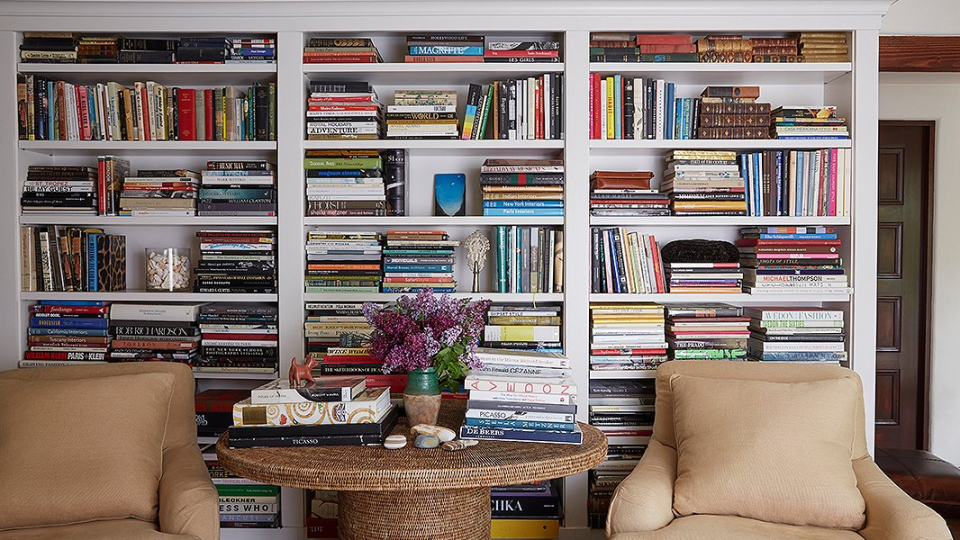
Cluttered Bookshelf Displays – Create Order Without Looking Empty
Cluttered bookshelf displays usually need editing, not complete removal. A shelf feels calmer when books, decorative objects, and open space create visible groups instead of competing for attention. You can keep personality and useful storage while making the arrangement easier to look at by changing scale, spacing, repetition, and the way objects are grouped.
Remove Enough to See the Structure
Take everything off one shelf at a time rather than emptying the entire room. This keeps the project manageable and helps you notice which objects actually belong together.
Return the largest or most useful pieces first. Books you read, storage boxes you need, and a few meaningful objects should earn space before decorative fillers do. Ideas from organized living topics can inspire the process, but the goal is to make the shelf suit your own room and belongings.
Create Small Visual Groups
Three unrelated objects spread evenly across a shelf often look more scattered than the same objects arranged as one group. Try pairing a short stack of books with a small object, or placing two pieces beside a larger anchor.
Leave some visible background around each grouping so individual items remain easy to see.
Mix Vertical and Horizontal Books
Rows of books at identical heights can feel dense, especially on a large wall of shelving. Breaking selected books into horizontal stacks changes the rhythm and creates small platforms for lightweight decorative objects.
Don’t turn every section into a display vignette. Some shelves can remain mostly books, particularly in a working library. Looking through interior styling perspectives may provide ideas, but restraint usually makes an existing collection look stronger.
| Shelf Problem | Simple Adjustment | Visual Effect |
|---|---|---|
| Too many tiny objects | Group or remove some | Less visual noise |
| Long solid book rows | Add horizontal stacks | More varied rhythm |
| Everything same height | Mix tall and short pieces | Better movement |
| No open background | Leave small gaps | Calmer appearance |
Repeat Shapes or Materials Sparingly
Repetition creates connection between separate shelves. Two or three objects with similar materials, shapes, or tones can make the whole unit feel intentional even when the items aren’t a matching set.
Spread repeated elements apart rather than placing them side by side. A basket on a lower shelf, a wooden frame higher up, and a small wooden object elsewhere can create continuity. Broader home arrangement ideas can help with inspiration without requiring you to replace what you already own.
Keep Practical Storage Attractive
Bookshelves often need to hold chargers, paperwork, small electronics, toys, or other items that aren’t naturally decorative. Matching or coordinating boxes and baskets can contain those items while keeping them accessible.
Use containers selectively. Filling every opening with a bin can make the shelf appear heavier than the original clutter.
Why Over-Styling Can Look Just as Cluttered
Trying to create a perfect arrangement on every shelf can produce a different kind of visual overload. Too many stacks, plants, frames, candles, bowls, and decorative objects may turn each section into a competing focal point.
Another common mistake is forcing symmetry everywhere. Balanced shelves don’t have to be mirrored. Let visual weight feel roughly even across the unit while allowing individual shelves to have different arrangements.
Frequently Asked Questions
How much empty space should a bookshelf have?
There isn’t a fixed percentage. Leave enough visible background that groups can be distinguished easily. A heavily used bookcase may naturally contain less open space than shelving intended mainly for display.
Should books be arranged by color?
Color sorting can create a strong decorative effect, but it may make individual titles harder to locate. Organize by color only if appearance matters more than your usual method of finding books.
How many decorative objects belong on one shelf?
The right number depends on shelf width and object size. A few larger pieces generally create less visual noise than many small objects. Stop adding items once separate groups begin competing for attention.
Edit Until the Shelf Feels Intentional
A good bookshelf shouldn’t look empty or staged beyond recognition. Keep the books and objects that matter, group smaller items, vary book orientation, and give important pieces enough breathing room. Once the overall arrangement looks balanced, resist filling every remaining gap. The unused space is part of the display too.





Leave a Reply