


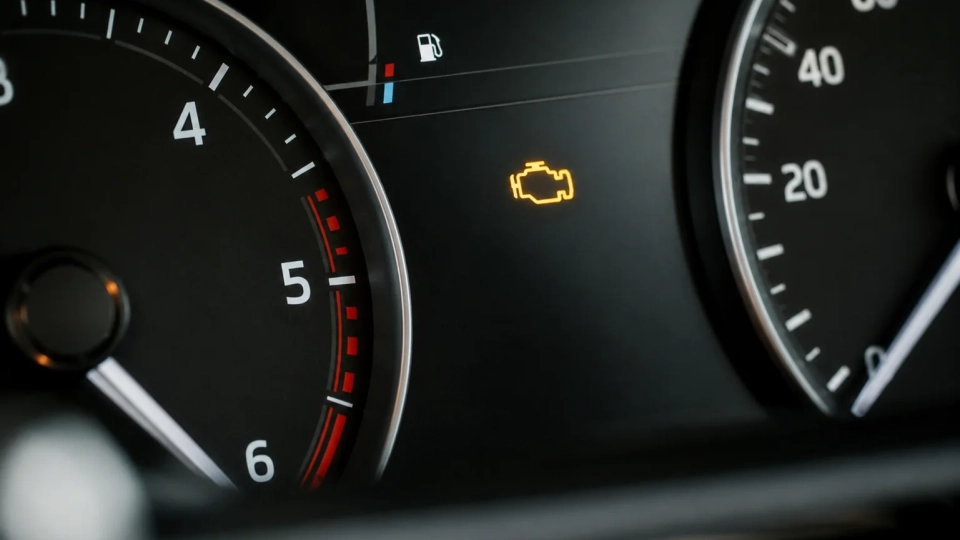
Transmission Warning Light – Scan Codes Before Driving Further
A transmission warning light means the vehicle’s control system has detected a condition that may affect transmission operation. The safest first diagnostic move is to scan the vehicle for stored trouble codes and record them before clearing anything.
Some faults are minor or intermittent. Others can lead to overheating, poor shifting, limp mode, or additional damage if driving continues.
Notice How the Vehicle Is Behaving
The warning light should never be interpreted in isolation. Pay attention to delayed engagement, harsh shifts, slipping, unusual noises, reduced acceleration, overheating messages, or a transmission stuck in one gear.
If the vehicle suddenly shifts abnormally after the warning appears, unnecessary driving should be avoided until the cause is understood. Continuing to force a slipping or overheating transmission can make an existing fault more expensive.
Record What Happened Before the Light Appeared
Note whether the vehicle was towing, climbing a hill, sitting in heavy traffic, or cruising normally. Operating conditions can help explain temperature, load, and pressure-related faults.
Scan Every Relevant Control Module
A basic engine-code reader may not access all transmission data. A suitable scan tool should communicate with the transmission control module and any related systems that can affect shifting.
Technicians reviewing commercial vehicle technical topics still need the exact codes from the affected vehicle before reaching conclusions. A diagnostic trouble code identifies a detected circuit or operating condition; it doesn’t automatically prove which component needs replacement.
Save freeze-frame data when available. Clearing codes too soon can erase valuable clues about temperature, speed, voltage, or load at the time of the fault.
Check Fluid Condition and Temperature
Transmission fluid transfers hydraulic pressure, lubricates components, and carries heat away from operating parts. Low level, contamination, leakage, or excessive temperature can contribute to warning messages and shift problems.
Broader automotive service resources may encourage routine maintenance, but fluid checks must follow the correct procedure for the specific transmission. Many modern units have no conventional dipstick and require temperature-sensitive checking methods.
| Warning Situation | Possible Meaning | Response |
|---|---|---|
| Light only, shifts normally | Stored/intermittent fault | Scan soon |
| Harsh or limited shifting | Protective mode possible | Reduce driving |
| Slipping under throttle | Pressure/internal issue | Stop stressing vehicle |
| Overtemperature warning | Excessive heat | Allow proper inspection |
Visible leaks under the vehicle should also be investigated rather than solved by repeatedly adding fluid.
Electrical Problems Can Trigger Transmission Warnings
Modern automatic transmissions rely heavily on electrical control. Solenoids, speed sensors, temperature sensors, wiring, grounds, connectors, charging-system voltage, and communication networks can all influence transmission operation.
Even information from tire and vehicle ownership resources should be treated as general context rather than a substitute for scan results. A low-voltage event, for example, can produce electronic faults that look different from internal mechanical damage.
Testing should follow the stored code and manufacturer diagnostic sequence instead of replacing sensors merely because their names appear in code descriptions.
What Drivers Commonly Misinterpret
One mistake is assuming a warning light means the transmission has already failed. Control systems are designed to detect faults early, and many warnings originate from electrical or hydraulic problems that can be repaired without replacing the entire unit.
The opposite assumption is also risky: turning the vehicle off, seeing the light disappear, and treating the problem as fixed. Intermittent faults often remain stored and may return under the same conditions.
Frequently Asked Questions
Can I drive with a transmission warning light on?
That depends on the accompanying symptoms. If shifting remains normal, a short trip for diagnosis may be possible. Slipping, overheating, severe banging, loss of drive, or restricted operation are stronger reasons to stop driving and arrange inspection.
Will disconnecting the battery clear a transmission warning?
It may clear some stored information on certain vehicles, but doing so can also remove diagnostic clues and reset learned values. Scanning and recording codes before disconnecting power is a better diagnostic approach.
Can a weak battery trigger transmission faults?
Low system voltage can disrupt electronic modules, sensors, solenoids, and communication between controllers. Battery condition and charging voltage may therefore be checked when transmission codes appear alongside broader electrical symptoms.
Scan First and Protect the Transmission
A transmission warning light should trigger diagnosis rather than guesswork. Record the symptoms, retrieve codes and freeze-frame information, inspect fluid correctly, and follow testing procedures for the specific fault.
If the transmission is slipping, overheating, making severe noises, or losing drive, avoid continuing to load it. Early diagnosis can prevent a controllable problem from becoming major mechanical damage.



Leave a Reply