


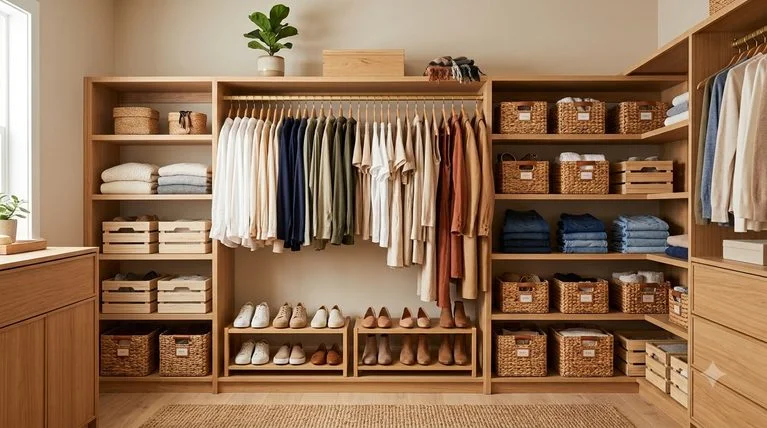
Crowded Closet Shelves – Create Room With Better Organization
Crowded closet shelves usually need better grouping and editing before they need more storage products. Removing unused items, assigning each shelf a purpose, and using vertical space carefully can create noticeable room without rebuilding the closet. The goal is not squeezing more possessions onto every shelf. It is making what you keep easier to reach.
Empty One Zone Instead of the Entire Closet
A full closet cleanout can become overwhelming fast. Start with one shelf, remove everything from that area, and sort the contents before touching the next section.
Create simple groups such as keep here, move elsewhere, donate, and discard. Browsing home organization ideas may provide inspiration, but your storage plan should reflect what you actually use rather than a staged closet designed mainly for appearance.
Put Frequently Used Items Within Reach
Eye-level shelves are valuable space. Reserve them for clothing, accessories, linens, or other items you reach for regularly.
Seasonal or rarely used possessions can move higher. Heavy objects should remain lower where lifting them is safer and easier.
Give Every Shelf One Main Job
A shelf becomes crowded quickly when unrelated items accumulate together. Assigning one broad category to each zone makes returning things easier and prevents random objects from slowly taking over.
For example, one shelf might hold folded sweaters while another contains bags. Broader household improvement features can spark storage ideas, but a system succeeds only if it is simple enough to maintain during a busy week.
| Closet Area | Good Use | Avoid |
|---|---|---|
| Eye level | Everyday items | Rare seasonal storage |
| Top shelf | Light, infrequent items | Heavy boxes |
| Lower shelf | Shoes or sturdy bins | Loose small accessories |
| Shelf corners | Labeled containers | Forgotten mixed piles |
Use Height Instead of Stacking Deeper
Deep piles waste space because items at the bottom become inconvenient to remove. Shelf dividers can keep folded clothing upright, while stackable bins may make better use of unused height.
Measure the available shelf before buying organizers. Storage products that are too wide or too tall can waste more room than they create.
You may encounter useful organized living resources while collecting ideas. Treat containers as the final step, though. Buying baskets before deciding what belongs in the closet often produces attractive containers filled with the same old clutter.
Reduce Duplicate and Forgotten Items
Crowded shelves sometimes hide possessions well enough that people buy replacements they already own. Bring similar items together before deciding how much space the category deserves.
Five half-used travel bags, several duplicate scarves, or stacks of bedding for beds you no longer own can consume valuable shelf room. Removing even a few unnecessary items may solve the problem without adding any hardware.
Where Closet Organization Usually Goes Wrong
The biggest mistake is treating organization as a packing challenge. Filling every available inch may look efficient on the first day, but tightly packed shelves are difficult to use.
Another problem is creating too many tiny categories. A system requiring every object to return to one exact position becomes tedious. Broad, obvious zones usually survive daily life better than a complicated arrangement that works only after a major cleanup.
Frequently Asked Questions
How do I organize deep closet shelves?
Use containers or zones that prevent items from disappearing at the back. Keep frequently used items toward the front and reserve deeper areas for clearly labeled, less frequently needed belongings.
Are shelf dividers worth using for clothes?
They can help when folded clothing repeatedly collapses into neighboring stacks. Dividers are most useful for sweaters, shirts, towels, and similar items that benefit from separate upright sections.
Should everything in a closet be stored in bins?
No. Bins work well for loose or small items, but putting everything inside containers can add unnecessary steps. Items used daily are often easier to maintain when openly accessible.
Create Space You Can Keep Organized
A functional closet leaves breathing room around the items you use instead of packing every shelf to capacity. Remove what no longer belongs, group similar possessions, place frequently used items within easy reach, and add organizers only where they solve a specific problem. A simple system with a little spare space will usually stay organized longer than a perfectly packed one.







Leave a Reply