


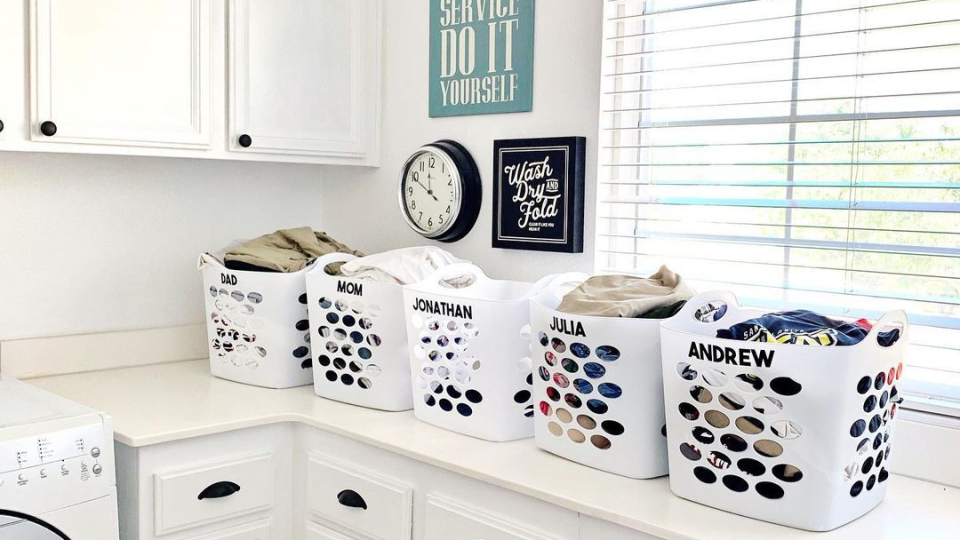
Messy Laundry Areas – Create Order in Small Spaces
Messy laundry areas become easier to manage when every item has a defined place and the limited space is organized around the actual washing routine. Instead of adding bulky storage, use walls, narrow gaps, doors, baskets, and the space above appliances to keep detergent, clothing, cleaning supplies, and everyday tools under control.
Start by Removing What Doesn’t Belong
Small laundry rooms often become overflow storage for unrelated household items. That makes even a reasonable amount of laundry equipment feel overwhelming.
Begin by clearing the floor, machine tops, shelves, and nearby corners. Return tools, bulk purchases, random boxes, and seasonal objects to more suitable storage areas.
Then keep only what supports washing, drying, stain treatment, ironing, cleaning, or temporary clothing storage.
Organize Around the Laundry Sequence
Position frequently used supplies according to when you need them. Detergent should be easy to reach near the washer, while dryer sheets or wool dryer balls belong closer to the dryer.
Ideas found through home organization reading can be useful, but copying a beautiful laundry room won’t help if its arrangement doesn’t match your routine.
Place daily supplies within easy reach. Reserve high shelves for refills, rarely used products, and backup items.
Give Loose Items a Container
Stain removers, clothespins, mesh bags, brushes, and dryer accessories quickly create visual clutter. Group similar items in small bins instead of allowing them to spread across shelves.
Labeling helps when several people use the laundry area.
Use Vertical Space Before Adding Furniture
Wall space is often the most underused resource in a compact laundry area. Simple shelves, hooks, hanging rails, wall-mounted organizers, or an over-door system can free valuable floor space.
Practical household coverage may showcase large cabinets and custom renovations, but small rooms often benefit more from shallow storage that doesn’t interfere with doors or appliance access.
| Problem Area | Space-Saving Fix | Good For |
|---|---|---|
| Empty wall | Shallow shelf | Detergent |
| Door back | Hanging organizer | Small supplies |
| Narrow gap | Slim cart | Bottles and refills |
| Open wall | Hooks or rail | Bags and tools |
Keep heavy products secure and place potentially hazardous cleaning products where children or pets can’t access them.
Build a Simple Sorting System
Laundry piles grow when clothing has no destination before wash day. Set up categories that match how your household actually washes clothes rather than creating an elaborate system nobody follows.
Useful options include:
- Everyday clothes
- Light or white loads
- Towels and linens
- Delicates or special-care items
A two-bin system may work better than four bins in a tiny room. Small-space inspiration from small-space ideas is most useful when it simplifies the routine instead of adding containers everywhere.
If floor space is tight, consider stackable or hanging hampers where practical.
Protect a Small Folding or Work Surface
Flat surfaces disappear quickly under detergent bottles, unmatched socks, mail, and cleaning supplies. If you have a counter or machine top suitable for folding, treat that space as a work area rather than permanent storage.
Return products to their assigned spots after each load. This tiny habit prevents clutter from rebuilding between laundry days.
In extremely small spaces, a wall-mounted folding surface may provide temporary workspace without consuming permanent floor area.
Where Laundry Organization Often Fails
Buying organizers before removing clutter is a common mistake. It can turn one messy room into a messy room filled with containers.
Too many categories also create extra work. If every item needs a different basket, bin, label, or shelf, family members may stop following the system.
Another problem is blocking appliance ventilation, doors, utility panels, plumbing access, or manufacturer-recommended clearances. Storage should make the room easier to use without interfering with safe appliance operation or maintenance.
Frequently Asked Questions
How can I organize a laundry area without cabinets?
Use shallow wall shelves, hooks, baskets, slim carts, door-mounted organizers, and labeled containers. Prioritize vertical space and keep only the supplies needed for laundry and nearby cleaning tasks.
What should stay on top of the washing machine?
Ideally, very little. If the appliance manufacturer permits items on top, a small tray for frequently used products may work, but keeping the surface mostly clear makes cleaning and laundry handling easier.
How do I stop clean laundry from piling up?
Create a consistent destination for finished loads. Fold or hang clothing shortly after drying and use separate baskets for household members if clothes can’t immediately be returned to closets or drawers.
Make Every Small Space Work Harder
A compact laundry area doesn’t need elaborate cabinetry to stay orderly. Remove unrelated clutter, organize supplies around the washing process, move storage upward, and protect your working surfaces. The best system is the one that makes completing a load simpler without demanding constant reorganizing.







Leave a Reply