


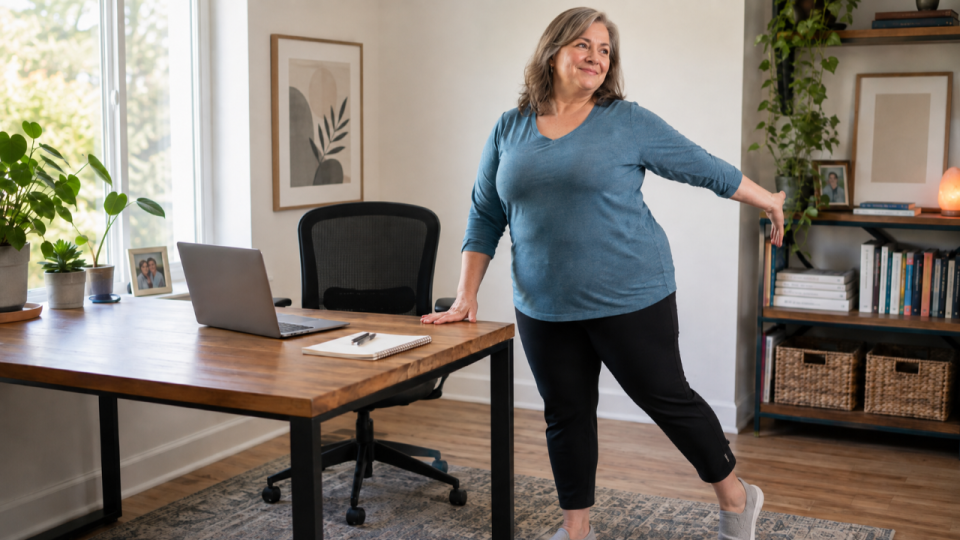
Sedentary Work Days – Add Movement Throughout Your Schedule
A desk-based job can quietly turn most of the day into sitting time. Long meetings, commuting, computer work, and evening screen use may leave little natural movement between waking and bedtime. Supporting heart health does not require transforming every workday into a workout; building repeated opportunities to stand and move can make an inactive schedule more active.
Why Is Too Much Sitting a Heart-Health Concern?
Physical inactivity and prolonged sedentary behavior are associated with poorer cardiovascular health. The American Heart Association encourages adults to move more and sit less while also working toward regular moderate or vigorous physical activity.
That distinction matters. A workout is useful, but it does not mean the rest of the day needs to remain completely motionless.
People may pass through everyday online resources while searching for lifestyle ideas, yet the simplest starting point at work is often visible in the schedule itself: identify where sitting continues uninterrupted for long periods.
Where Can Movement Fit Into a Workday?
Movement can be attached to tasks that already happen. Stand during part of a phone call, walk to speak with a colleague when practical, take stairs when appropriate, or use a few minutes of a break for walking.
The goal is not to make every break strenuous. Frequent light movement can reduce the amount of time spent continuously sitting, while planned exercise provides a separate opportunity for more sustained activity.
Someone browsing general lifestyle reading can collect many ideas, but habits are easier to maintain when attached to predictable events such as lunch, meetings, or the end of an hour.
| Work Moment | Movement Option | Practical Benefit |
|---|---|---|
| Phone call | Stand or pace | Breaks sitting time |
| Short break | Walk briefly | Adds light activity |
| Floor change | Take stairs if suitable | Adds movement |
| Lunch period | Walk after eating | Creates a routine |
How Much Activity Should Adults Aim For?
The American Heart Association recommends at least 150 minutes of moderate-intensity aerobic activity each week, or 75 minutes of vigorous activity, or an appropriate combination. It also advises sitting less and moving more.
Those targets do not need to turn every work break into formal exercise. A realistic schedule can combine intentional workouts with smaller amounts of movement throughout the day.
Make the Environment Do Some Work
Put a water bottle away from the desk, take a longer route to common areas, or schedule a walking conversation when the situation allows.
General online reading material may offer inspiration, but environmental cues are valuable because they reduce the need to remember movement constantly.
Where Workplace Movement Plans Often Fail
An all-or-nothing plan is easy to abandon. Someone who decides to exercise intensely every morning may conclude the entire effort has failed after missing two sessions.
Another mistake is confusing standing still with complete physical activity. A standing desk changes posture and can reduce sitting, but cardiovascular fitness still benefits from actual movement and appropriately intense exercise. Build several options into the day so one missed walk or meeting interruption does not erase the whole routine.
When Should Exercise Changes Be Discussed With a Clinician?
People with significant heart or lung disease, physical limitations, concerning exercise symptoms, or other medical conditions may need individualized guidance before substantially changing activity.
Stop activity and seek prompt medical attention for concerning symptoms such as chest pain, fainting, or severe unexplained breathlessness. The American Heart Association activity recommendations also advise people with chronic conditions or disabilities to discuss appropriate types and amounts of activity with a health professional.
Frequently Asked Questions
Does walking around the office count as movement?
Yes. Brief walking adds physical movement and interrupts sitting, although light office walking is not necessarily equivalent to moderate- or vigorous-intensity aerobic exercise.
Is a standing desk enough for heart health?
A standing desk can reduce sitting time, but standing alone does not replace regular physical activity. A broader routine should include movement and, when appropriate, aerobic exercise.
Is it better to exercise once or move throughout the day?
These approaches are not mutually exclusive. Planned exercise can build fitness, while movement breaks reduce long uninterrupted periods of sitting. Combining both is often more practical than treating them as competing options.
Build Movement Into Existing Habits
Look at your calendar rather than waiting for spare time to appear. Attach small movement breaks to calls, meals, meetings, or routine transitions, then maintain planned exercise that fits your ability. A workday becomes less sedentary through repeated choices, not one dramatic burst of activity.
This article is for general informational purposes and is not a substitute for professional medical advice, diagnosis, or treatment.








Leave a Reply